· 6 min read
Loss of Signal
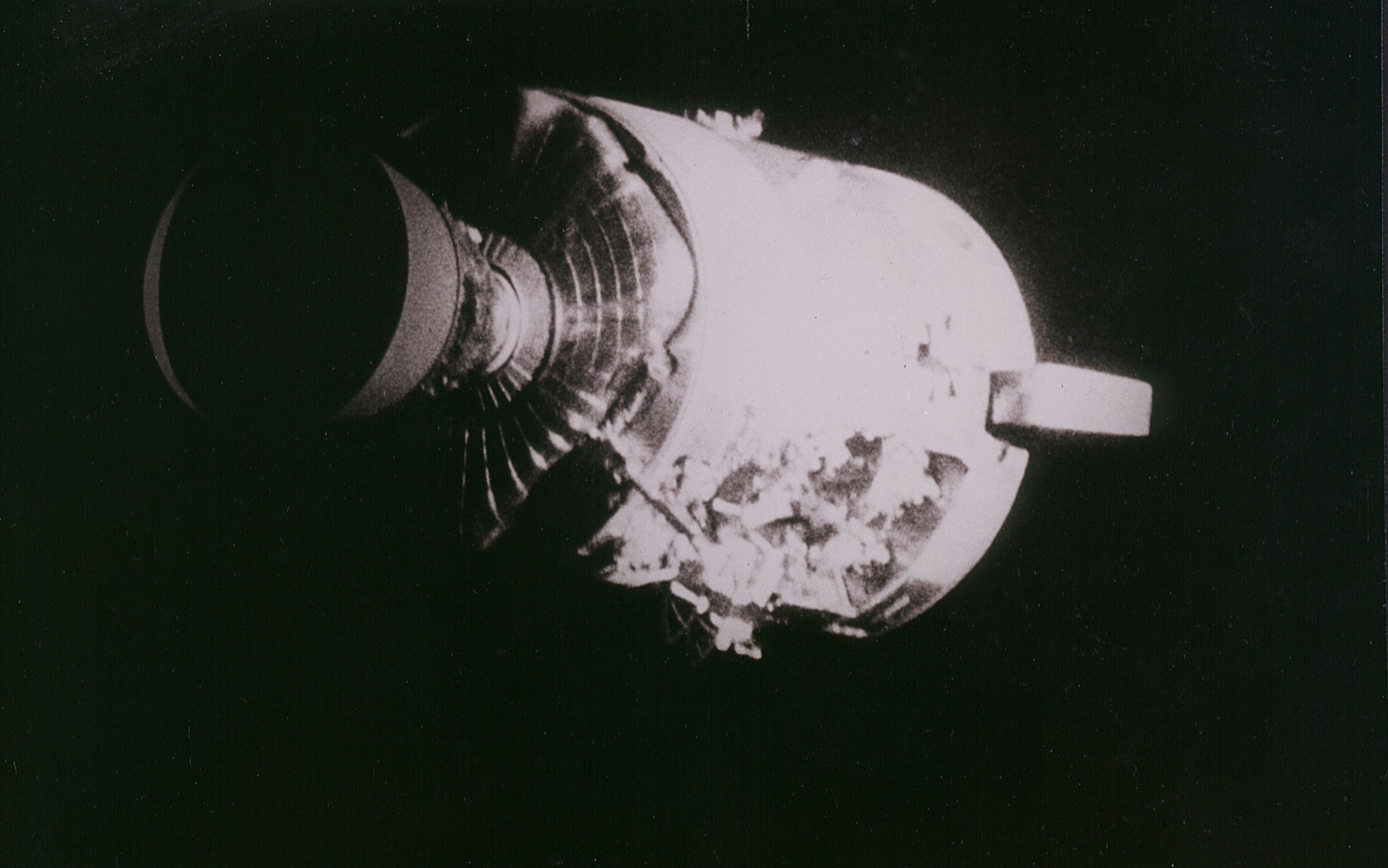
As Apollo 13 began its descent into Earth’s atmosphere, we lost contact during a tense six-minute communications blackout. It was expected, but after the oxygen tank explosion and days on the edge of catastrophe, the world held its breath. The blackout lasted longer than the anticipated three minutes: first 10 seconds, then 30 seconds, then one minute, then one minute and 27 seconds.
“Houston, this is Odyssey, it’s good to see you again.”
Loss of signal (LOS) is scary and I think we’re in a loss of signal moment as a society. It feels equally disorienting and terrifying as the moments when Apollo 13 entered back into our atmosphere, but I don’t think our LOS is going to resolve in under six minutes unfortunately.
For us, the signal hasn’t disappeared into silence, but has been lost in a cacophony of noise that makes it impossible to tell what is good, real, or useful. I was recently reading Chuck Klosterman’s book, The Nineties, which is a thoughtful exploration of the era I grew up in. During a later chapter, he recounts the advent of 24-hour News Networks and the following major events that shaped the collective consciousness: The OJ trial, the Oklahoma City Bombing, Columbine, and others. A key point he makes was both that we felt more informed, while simultaneously being less so. Many of the breaking revelations turned out to be wrong, yet, everyone had the ability to point to things being said and validate the worldview they already have.
Sociologists call this the information paradox, where more information makes people less informed. I was part of the generation that believed the internet would bring in a new era of humanity that was more compassionate, understanding, and enlightened. How could we not? We had the world’s knowledge at our fingertips! Instead, it evolved into personal echo chambers that reinforce the beliefs you already hold.
Yuval Noah Harari, in his book Nexus, calls this the naïve view of information. He asserts it’s a cycle that has played out across every new medium: the printing press, radio, tv, the internet, and now AI. The new technology arrives wrapped in optimism, destabilizes society for a time, and is only later absorbed safely when society has built up a resistance and new safeguards. Until then, the new technology tends to reward whoever shouts the loudest that the system is rigged.
Effort used to be one of our signals. I’m not saying that hard work is what makes something good, but when everything took a lot more time and effort, its existence alone was a signal that it was worth considering. Now, as the cost of creating plummets, things just exist because they can, not because someone invested in them and willed them into being.
My kids, like many of this generation, are pretty anti-AI. I think AI is a catch-all for them for many problems we face; environmental issues, dysfunctional government, inequality, tech surveillance, and probably many others. However, one thing that comes up over and over is that what they see of AI just isn’t good. As artists and lovers of art, their experience of AI is very different than mine. I see faster PowerPoints, Excel, or Python scripts being created in a way that frees up my time to do more interesting things. These were never my craft, they were the cruft that got in the way of the real value. My kids, however, see a deluge of bad art filling their feeds. Bad because it’s not thoughtful. Bad because it doesn’t have meaning. Bad because it’s stealing other work. Bad because it’s often churned out randomly in the hopes the algorithm gods bless it and the generator gets a windfall of ad revenue.
There’s a lot to dislike.
The internet has always had bad art. It’s always had slop. However, that slop still took effort. That effort was enough to limit the amount. What AI has unleashed is everybody with a half-baked idea to broadcast it without any filter. The rest of us are left to wade through the onslaught of badly considered ideas hoping for crumbs of meaning.
Art is one thing, but we’re seeing this same thing everywhere. It’s easier to create a thought piece than ever. Or a video. Recently I pointed Claude at a website I created, leveraged a video skill, and quickly had a marketing video that was an amazing start. It’d be easy to push out thoughtlessly. It’s good enough and my investment was so low. I’m not going to ship it publicly; the work deserves higher ambition.
It’s hard enough to judge the work in my own life, but how do we judge it in others? At work, a long, detailed email is no longer a signal of thought, consideration, or perspective. I’m getting more of them than ever and I don’t feel more informed for it. My choice is either to spend more of my time filtering the slop or to further embrace AI to summarize it all and surface the gems, an ouroboros devouring its own tail.
I don’t have an answer for the present loss of signal moment, other than a hope that we’ll get through it, because we have in the past. Hank Green suggests that we meet the moment by cultivating awareness of how algorithms incentivize and manipulate our attention and beliefs. It’s a start at least.
On the personal level, I’m focused more on my own learning, creativity, and growth, while seeking out others who are doing the same. If there is a broader answer, I think it’s in shrinking your own world intentionally, focusing on craft and community. The intentional part is the essential and hard thing to do.
I really enjoyed Matt Stauffer’s Laravel talk, Building Software at the Edge of Your Understanding. He describes a good path where you use AI to stretch yourself, not replace yourself. It’s the difference between cognitive offloading (where AI does some of the work, but you are able to own the answer) and cognitive surrender (the AI does so much and so far beyond your understanding, all you can do is trust). This seems like a pattern worth thoughtfully applying in areas beyond software, even if the line between offloading and surrender is slippery and hard to see.
Wrestling with language and ideas is one of the places I do this. I recently took a pause on blogging for a bit because sometimes it’s hard to understand what’s the point of talking out loud in a room full of people shouting, but writing is still such a good way to become oneself. To quote Kurt Vonnegut, “Practice any art… no matter how well or badly, not to get money and fame, but to experience becoming, to find out what’s inside you, to make your soul grow.”
Let’s not surrender to AI and mistakenly surrender ourselves.
Reply by email → I read everything, and usually write back.